Whisper Networks: How Dubai's Luxury Hotels Actually Talk (and What Americans Should Never Say Out Loud)
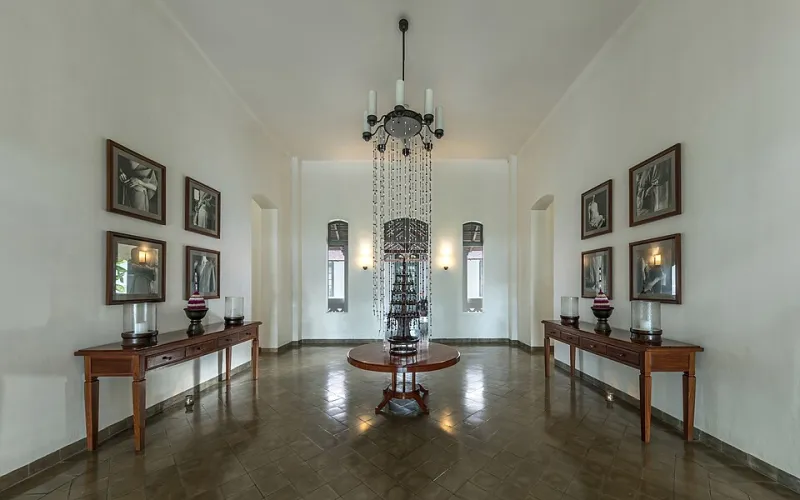
Photo: Basile Morin, CC BY-SA 4.0, via Wikimedia Commons
Every American lands in Dubai with the same software installed. You walk up to the counter, you state what you want, you pay, you receive it. That's the transactional grammar of Las Vegas, Miami, and pretty much every US city with a nightlife economy. It's efficient. It's also completely wrong for the emirate.
Dubai operates on what you might call a whisper economy — a parallel vocabulary where the actual subject of any conversation is never named, and the fluency you demonstrate in avoiding the topic is precisely what signals you're worth dealing with. If you've ever watched a diplomat negotiate, you've seen the style. Here's how to recognize it before you accidentally blow your cover.
The Vocabulary of the Unsaid
Start with the front desk. In a Dubai luxury hotel, certain phrases function as load-bearing euphemisms. A guest asking about "a friend who might join me later" is not asking about the hotel's guest policy in the abstract. A request for a recommendation to a "good club" or a "relaxing spa with private rooms" can carry freight well beyond the literal words. The concierge — and Dubai concierges are arguably the most skilled in the world at this — will hear exactly what's underneath and respond in kind, or will offer a polite non-answer that itself is the answer.
The key thing to understand: nobody is being cagey for fun. The vagueness is the system. It protects the guest, the staff, and the ecosystem around them. In Vegas, a host might hand you a flyer on the strip. In Dubai, the equivalent information travels through implication, and the implication is the product.
Telegram Is the New Back Room
Then there's the digital layer. Much of the coordination in this world happens on encrypted messaging apps — Telegram especially — through channels and referral networks that operate entirely by word of mouth. You will not find these by searching. You arrive at them through introductions, through a friend of a friend, through someone who vouches for you. Trust is the currency, and it's earned slowly.
This is a hard adjustment for Americans, who are used to everything being one Google search away. The friction is the point. A network that anyone can join is a network that attracts attention, and attention is the one thing this scene cannot survive.
A word of caution here: if you're an outsider being aggressively "helped" by a stranger who's eager to connect you to something, treat that as a red flag, not a courtesy. Genuine access in Dubai is quiet. Loud offers usually come with a hook — inflated prices, scams, or worse. Vet everything, never send money ahead to someone you haven't met through a trusted chain, and keep your expectations grounded.
The Middleman Economy
Intermediaries — drivers, doormen, well-connected bartenders, members-only venue staff — sit at the junction points of these networks. Tipping generously and behaving graciously opens more doors in Dubai than flashing cash ever will. A driver who's been treated well all week may, at the right moment, make a single low-key suggestion. That suggestion is worth more than any amount of blunt asking.
The etiquette of receiving such an overture matters enormously. You don't confirm anything explicitly. You don't negotiate in the open. You express general appreciation, you let the conversation drift, and if you're interested, you follow the channel you're pointed toward rather than pushing the source for details. Pushing is how you get politely frozen out — and in a city this small at the top, being frozen out travels.
What Never to Say
A short list of conversation-ending moves, compiled from the collective wisdom of people who've learned the hard way:
- Asking directly. The direct question, in any context, marks you as either a tourist or a problem. Both get the same response: nothing.
- Naming things in texts. Assume any written message can be read by someone else. Euphemism isn't paranoia; it's basic hygiene.
- Negotiating with strangers. Anyone quoting you a price in a hotel lobby is not part of the network — they're a hustler, and possibly a setup.
- Overstaying your read. If a staff member changes the subject, accept the pivot gracefully. The subject change is the answer.
The Bigger Picture
There's a temptation to see all this as merely evasive, but it's better understood as a privacy architecture — one that a lot of Americans, exhausted by the receipts-everything culture back home, end up finding genuinely restful. Dubai's discretion isn't just about one industry. It extends to how the whole city handles guests: your name isn't bandied about, your evening isn't content, and what you do between the valet stand and your suite stays between you and the city.
Learn the dialect, move slowly, and let the room come to you. In Dubai, the people who ask nothing often hear the most.