The Volume Dial Goes to Zero: Why Dubai Rewards Americans Who Know When to Whisper
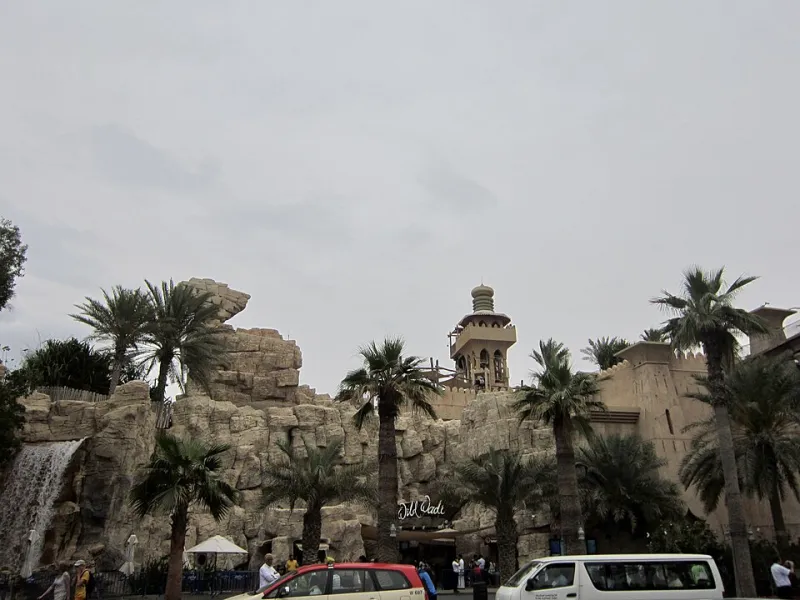
Photo: Ank Kumar, CC BY-SA 4.0, via Wikimedia Commons
Let's be honest about how most Americans party. We wear our weekends on our sleeves — literally, in Miami, where the sleeves come off by 10 PM. We toast loudly. We make friends with strangers in elevator queues. We treat a hotel lobby like an extension of the hotel bar. None of that is wrong. It's just completely out of step with how Dubai operates after dark.
And here's the thing nobody puts in the travel brochure: in Dubai, how loud you are directly determines how welcome you are. Discretion isn't a suggestion here. It's the admission price.
The Culture Clash You Didn't Know You Were Packing
Miami runs on display. The whole economy of South Beach is built on being seen — the outfits, the bottle service, the table you engineered to be adjacent to the DJ. Los Angeles operates the same way with better posture: everything is a soft launch of something bigger.
Dubai inverts that equation entirely. This is a city where the wealthiest people in the room are often the quietest, where the big deal isn't announced, it's closed. Flash gets noticed; subtlety gets respected. If you walk into a Gulf hotel acting like the night is your personal content shoot, you haven't signaled status. You've signaled that you don't know where you are.
That matters double if you're here to meet people privately — and a lot of American visitors are. Which brings us to the single biggest rookie mistake on record.
The Rookie Mistake: Treating Privacy Like a Guarantee
Here's what veteran visitors understand that first-timers don't: in Dubai, privacy is mutual, not automatic. Nobody is going to broadcast your business — but the moment you broadcast your own, you've broken the social contract that was protecting you.
What does that look like in practice? It looks like not discussing arrangements in elevators, taxis, or hotel hallways. It looks like not treating your concierge as a co-conspirator. It looks like leaving the loud retelling of your evening back in the States, where it belongs. The Americans who get quietly blacklisted from good hotels aren't the ones who did something scandalous. They're the ones who couldn't stop narrating it.
Think of it like Nevada before gaming became a family business — the old-school Vegas rule of what happens here stays here, except in Dubai it's enforced by social custom rather than marketing slogan. Nobody will confront you. You'll just notice doors staying closed.
A Crash Course in Public Behavior
Dubai is genuinely one of the safer, more welcoming cities an American can visit, and the hospitality is legendary. But the public-facing rules are more conservative than anything you'll find between South Beach and Sunset Boulevard. A few non-negotiables:
- Public displays of affection are a hard no — even hand-holding reads differently here than it does in Santa Monica.
- Dress codes are relaxed inside hotel venues but the street, the malls, and the older districts expect more coverage than a crop top provides.
- Alcohol lives inside licensed venues. There's no open-container culture, no to-go cup, no rooftop pregame on the balcony.
- Photography of strangers — especially women — is not just rude, it can get you into real legal trouble.
None of this requires you to become a different person. It requires you to read the room, which, if you've survived an LA dinner party, you're fully capable of.
What 'Low-Key' Actually Means at a Gulf Hotel
American hotels are built around the lobby as a social stage. Gulf hotels are built around the corridor as a privacy machine. Multiple entrances, discreet elevators, staff trained to be present without being observant — the architecture itself is doing discretion work, and it expects you to cooperate.
'Low-key' at a Dubai hotel means:
- Guests arrive as guests. If you're inviting someone to your room, register them properly at reception or use the visitor process. Sneaking reads as sketchy even when it isn't.
- Noise stays inside the room. The hallway is not your afterparty. Sound carries, and security notices.
- The staff see everything but acknowledge nothing. Reciprocate that courtesy. Don't make them witnesses to a performance.
- Dress the part in transit. The walk from elevator to room is public space. Act accordingly.
The Payoff
Here's the surprise for most American travelers: once you calibrate to Dubai's volume settings, the city opens up in ways Miami never could. The discretion that feels restrictive on night one feels like luxury by night three. Nobody's filming you. Nobody's telling your story at brunch. The evening belongs entirely to the people in it.
Los Angeles sells the fantasy of being seen. Dubai sells something rarer — the experience of being completely unseen, on your own terms. Learn the etiquette, keep your voice down, and you'll understand why the Americans who come once tend to come back every winter.
Just don't Instagram it.